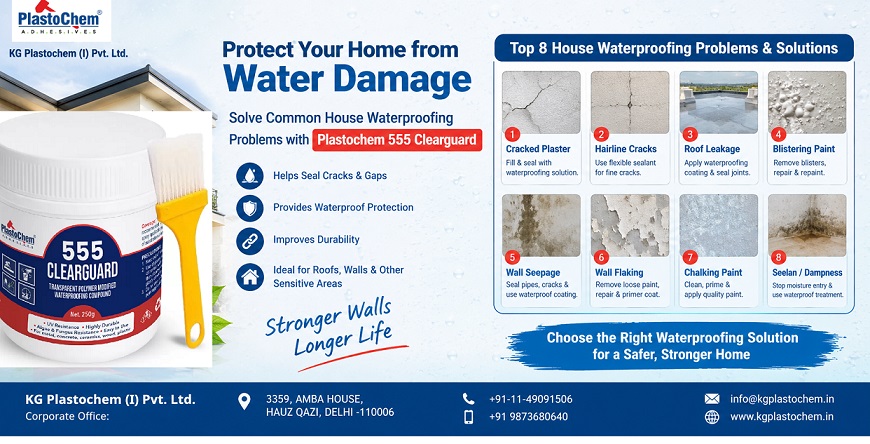
Water seepage, damp walls, cracked plaster, peeling paint and roof leakage are common problems that can gradually affect the appearance and durability of a building. Early identification of moisture-related problems and the use of suitable waterproofing and sealing materials can help protect walls, roofs and other vulnerable areas.
This guide explains the major house waterproofing problems, their causes, repair methods and the role of products such as Plastochem 555 Clearguard in suitable waterproofing and sealing applications.
Table of Contents
- Cracks in Plaster
- Hairline Cracks Caused by Humidity
- Roof Water Leakage
- Blistering and Bubbling of Wall Paint
- Wall Seepage
- Wall Flaking and Peeling Paint
- Chalking of Exterior Wall Paint
- Seelan or Dampness
- Plastochem 555 Clearguard
Introduction to House Waterproofing
Waterproofing is the process of protecting a building from unwanted moisture and water penetration. It can be incorporated during construction or carried out later as part of repair and maintenance work.
Areas such as roofs, bathrooms, kitchens, balconies, exterior walls, foundations, window frames and surfaces below water tanks are particularly vulnerable to water-related problems.
Ignoring minor cracks, damp patches or water leakage can eventually result in damaged plaster, peeling paint, deterioration of building surfaces and other maintenance problems. Therefore, identifying the source of moisture and treating it at an early stage is important.
Common Waterproofing Problems and Their Solutions
1. Cracks in Plaster
Cracks in wall plaster can develop because of plaster shrinkage, temperature changes, building movement, improper cement and sand proportions or inadequate surface preparation.
Even small cracks should not be ignored because they can become possible pathways for rainwater and moisture.
Solution for Cracked Plaster
- Inspect the crack and remove loose plaster around the damaged area.
- Slightly widen deeper cracks where necessary so that the repair material can penetrate properly.
- Clean dust and loose particles from the crack.
- Apply a suitable crack-filling or waterproofing material.
- Allow the repair material to cure properly.
- Finish the repaired surface with a suitable filler or joint compound.
- Sand the surface and apply primer and paint.
For areas exposed to moisture, a suitable waterproofing sealant such as Plastochem 555 Clearguard can be considered according to the manufacturer’s application recommendations.
2. Hairline Cracks Caused by Humidity and Temperature Changes
Fine or spider-web-like cracks can appear on plastered surfaces because of drying and shrinkage, humidity, temperature variation and movement between construction materials.
Procedure for Repairing Hairline Cracks
- Clean the affected surface and remove loose particles.
- Open the crack slightly if required to create a suitable repair profile.
- Remove dust using a brush or vacuum.
- Fill the prepared crack with an appropriate flexible sealant.
- Allow sufficient drying or curing time.
- Sand the repaired area to achieve a smooth finish.
- Apply primer and repaint the surface.
The objective should not simply be to cover the crack with paint. The crack should first be properly repaired and sealed to reduce the possibility of moisture entering through the damaged area.
3. Roof Water Leakage
Roof slabs are among the most exposed parts of a building. Rainwater accumulation, blocked drains, inadequate slope, concrete cracks and openings around pipes, water tanks or other installations can create leakage points.
If water remains on the roof for a long period, it can gradually find its way through small cracks and construction joints.
Solution for Roof Leakage
- Identify the actual source of water leakage.
- Clean the roof and remove loose or damaged material.
- Check drainage outlets and ensure that rainwater can flow properly.
- Repair visible cracks and damaged joints.
- Seal pipe penetrations and other vulnerable openings.
- Apply an appropriate waterproofing system suitable for the roof condition.
For suitable joints, gaps and sealing applications, Plastochem 555 Clearguard can be evaluated as part of the repair system according to the manufacturer’s instructions.
4. Blistering and Bubbling of Wall Paint
Bubbles or blisters under paint are commonly associated with moisture, trapped water vapour, heat or poor adhesion between the coating and the wall surface.
Simply repainting the affected section without identifying and controlling the moisture source can cause the problem to return.
Solution for Blistering Paint
- Carefully remove blistered and loose paint.
- Identify and stop the source of moisture.
- Repair damaged plaster or cracks.
- Allow the surface to dry completely.
- Sand the surface properly.
- Apply a compatible primer or sealer.
- Repaint with a suitable quality coating.
5. Wall Seepage
Wall seepage can occur because of leaking plumbing lines, exterior cracks, rainwater penetration, poorly sealed joints or moisture entering through exposed walls.
Continuous seepage can produce damp patches, stains, deterioration of paint and damage to plaster.
Solution for Wall Seepage
- Inspect plumbing and concealed water lines for leakage.
- Repair cracks on exterior walls.
- Seal openings around pipes and fixtures.
- Improve rainwater drainage around the building.
- Apply suitable exterior waterproofing treatment.
- Use water-resistant coatings where appropriate.
For suitable sealing and waterproofing-related applications, Plastochem 555 Clearguard can be considered according to the specific repair requirement and manufacturer’s recommendations.
6. Wall Flaking and Peeling Paint
Peeling or flaking paint is often a symptom of an underlying surface or moisture problem. Excess moisture, poor surface preparation, incompatible coatings and weak adhesion can cause paint to detach from the wall.
Solution for Wall Flaking
- Scrape away loose and flaking paint.
- Remove damaged or weak material from the surface.
- Repair cracks, holes and uneven areas.
- Allow repaired areas to dry completely.
- Sand the surface to make it smooth.
- Apply a suitable wall primer.
- Finish with a compatible topcoat.
If moisture is responsible for the peeling paint, the underlying water-entry problem should be addressed before repainting the wall.
7. Chalking of Exterior Wall Paint
Chalking occurs when the surface of exterior paint gradually becomes powdery. Long-term exposure to sunlight, weathering and degradation of the paint binder can contribute to this problem.
Solution for Chalking
- Brush away loose powder from the wall surface.
- For severe chalking, wash the surface thoroughly using water and a suitable cleaning solution.
- Allow the wall to dry completely.
- Check whether further powdering remains after drying.
- Apply a suitable masonry primer or sealer.
- Finish with a high-quality exterior paint.
Proper surface preparation is important because applying fresh paint over a heavily chalked surface can result in poor adhesion and premature paint failure.
8. Seelan or Dampness in Walls
Seelan or dampness is one of the most common moisture-related problems in residential buildings. It may originate from ground moisture, basement areas, leaking pipes, roof drainage, window frames, exterior walls or cracks around construction joints.
Common Signs of Dampness
- Dark or wet patches on walls
- Musty smell
- Paint deterioration
- Plaster damage
- White salt deposits
- Peeling or bubbling paint
Solution for Seelan or Dampness
The first step is to identify where the moisture is entering the building.
- Repair leaking water supply or drainage pipes.
- Seal cracks and vulnerable construction joints.
- Improve rainwater drainage.
- Repair damaged roof and wall surfaces.
- Apply a suitable waterproofing treatment.
- Use an appropriate waterproof sealant for suitable joints and gaps.
Where sealing is required, Plastochem 555 Clearguard can be considered for suitable applications in accordance with the product’s technical recommendations.
Plastochem 555 Clearguard for Waterproofing and Sealing Applications
Plastochem 555 Clearguard can be explored for suitable waterproofing and sealing applications in building repair and maintenance work.
Effective waterproofing is not simply about applying a coating over a damp surface. The correct approach involves identifying the source of water, preparing the surface properly, repairing cracks or damaged areas and selecting a suitable waterproofing or sealing product for the particular application.
To learn more about the product, visit the Plastochem 555 Clearguard Waterproofing Glue product page.
Why Early Waterproofing Repair Is Important
Small cracks, damp patches and minor leakage may initially appear harmless, but continuous moisture exposure can gradually damage plaster, paint, masonry and other building components.
Water can also travel away from the original entry point, which means the visible damp patch may not always indicate the actual source of leakage.
An effective waterproofing approach should therefore follow three basic principles:
- Identify the source of water penetration.
- Repair the damaged area using suitable materials and proper surface preparation.
- Protect the surface against future moisture entry with an appropriate waterproofing system.
Conclusion
Waterproofing problems can occur in almost every type of building, from residential houses and apartments to commercial properties. Cracked plaster, roof leakage, wall seepage, dampness, blistering paint, peeling paint and chalking are often connected with moisture entering or remaining within the building structure.
Regular inspection and timely repair can help prevent minor waterproofing issues from becoming expensive maintenance problems. Products such as Plastochem 555 Clearguard can be considered for appropriate waterproofing and sealing applications based on the surface condition and manufacturer’s recommendations.
For more information, visit KG Plastochem or explore the Plastochem 555 Clearguard product page.
Note: Always follow the manufacturer’s technical data, surface-preparation requirements, coverage, curing time and recommended application method before using any waterproofing or sealing product.